
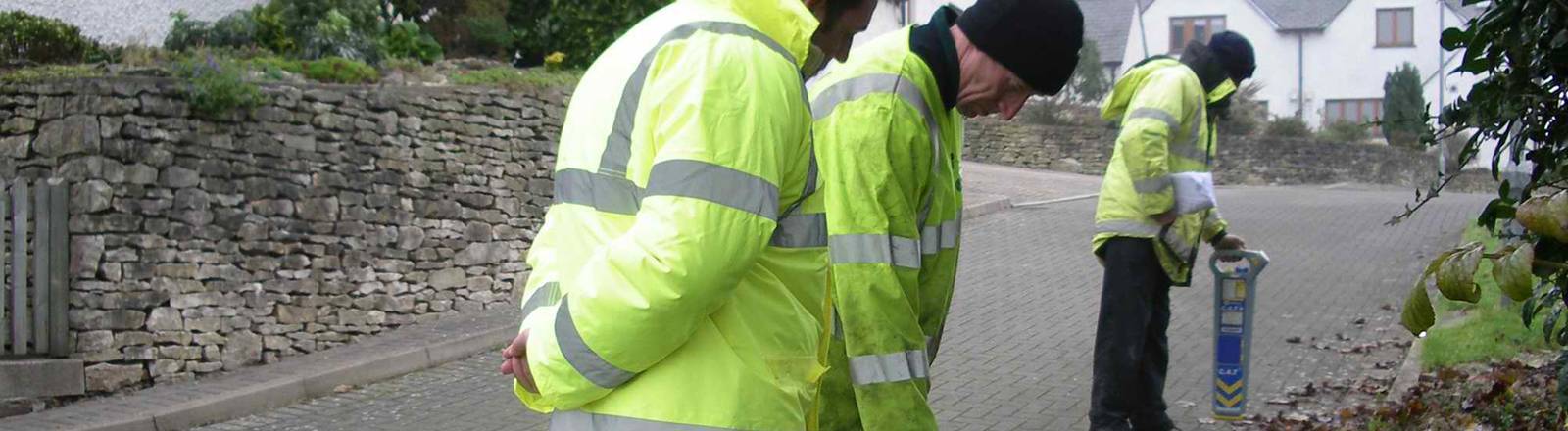
NRSWA Unit LA or Cat & Genny Training - Open Course
Open courses
From £299 + VAT
Traditional classroom available UK wide
Group / Onsite
From £300 + VAT
Trainer comes to you
Who should attend a NRSWA LA or CAT & Genny Training Course?
Cable avoidance training (cat and genny training) will teach you how to locate and avoid underground services, such as electricity and gas during excavation work. Therefore, it is essential for those who work on excavating the highways. It is a NRSWA ‘Key Certificate’, meaning you cannot have a Streetworks card with excavation and reinstatement units on it without completing the Location and Avoidance unit with them.
It is not only essential to the health and safety of operatives working on excavation, it is also important for supervisors overseeing the work and making sure procedures are followed. Maintaining safe excavation practices is vital to prevent costly disruptions during construction and civil engineering projects.
NRSWA Unit LA or Cat & Genny Open Course - Key Information
-
Half-day or 1-day training course depending on location
-
Receive a nationally recognised qualification through NRSWA training or an in-house certificate
-
Assessment & Certificate included in the course price
-
No formal entry requirements to enrol on either course option
-
Learn how to avoid underground utilities when excavating
-
A NRSWA card and certificate is valid for 5 years, an in-house certificate is valid for 3 years

NRSWA Unit LA or CAT & Genny Training Course Details
On receiving payment for your NRSWA Unit LA or Cat & Genny course, an email with your ‘course joining instructions’ is sent to you.
This documents includes the following details:
- The date of your chosen course
- Course start time at the venue
- Address of your chosen venue
- Details of what to do if you need any special requirements to complete the course, such as a physical disability, or a learning or reading difficulty
NRSWA courses usually have a start time of between 8am and 8:30am and in-house training usually starts between 9 and 9:30am.
You need to bring photographic ID, such as a driving licence or passport with you.
Lunch is not included, so please provide your own.

NRSWA Unit LA Location and Avoidance or CAT & Genny Training Course Content
In-House CAT & Genny Training
Please note the subjects covered may vary at different course sites
- Reasons for using locators – both safety and financial.
- Theory – covering both the benefits of the system and the limitations of this cat and genny technology.
- HSE Video – Alive or Dead.
- Relevant health and safety legislation.
- Practical work – hands-on locating using receiver, transmitter and accessories.
- Feedback, questions/answers, application and techniques, general care and maintenance of equipment.
The course also covers
- Simple ways to locate street lighting cables.
- Location of bends.
- Location of junctions.
- Identification of utilities.
- Service connections.
- Safe working practices.
- Locating through concrete reinforcing.
- Depth measurement (Where Applicable).
- Using Sondes (a specific transmitter) for Non-Metallic Pipes.
NRSWA Unit LA
The NRSWA is an accredited certification and therefore covers specific learning objectives set by HAUC UK (Highway Authorities & Utilities Committee).
The learning objectives covered in this course are:
- Understand and interpret plans that show the location of underground utilities
- Understand and identify utility and highway services that could be encountered during excavation of highways
- Understand the hazards and risks associated with utilities and highway services when excavating
- Understand how to use, and use, equipment that locates underground pipes and cables
- Follow safe working practices on site (e.g. PPE, safe use of tools and use of risk assessments) by being able to identify and follow the relevant health and safety regulations, standards or any other legislation
Utility Services include:
- Plastic and metal gas mains and services
- Plastic and metal water mains and services
- Sewers and drains
- Low and high-voltage electricity cables
- Telecommunications and television cables
- fibre optic cables
Highway Services include:
- highways drainage
- Culverts
- Land drains
- Street lighting and traffic signal equipment
- Roads with special engineering controls

Equipment to bring on the day
You will be learning on a live site during your course. Therefore, you will be required to wear protective clothing. Requirements vary by location, and some centres can be more accommodating but typically you are required to bring:
- Fluorescent Jacket Long-sleeve
- Overalls/Work Clothes (shorts not allowed)
- Gloves
- Safety Boots
- Waterproof Clothing
If you do not have access to any of this equipment/clothing please let us know, call or chat with our team and they will be happy to advise you.
You will be asked to provide photo ID on your course, such as a passport or driver’s license, please bring this with you.
Customer testimonials
Here are some testimonials left by our previous happy customers

Assessment and Certification
NRSWA Training
You will complete an assessment consisting of 20 multiple-choice questions with 45 minutes in which to answer them. You will pass the unit if you achieve a score of 80% or more.
Successful completion of the NRSWA Location and Avoidance training course results in you gaining a City & Guild, SQA or CABWI (location dependant) certificate and a Street works card or ‘Ticket’ valid for 5 years.
NRSWA training courses are mainly practical, but you will have some written work.
In-house Training
You will complete a short assessment that may differ depending on the training school. The in-house certificate is valid for 3 years, then it is suggested you complete the training again to keep your knowledge and skills up-to-date.

Entry Requirements & Special Considerations for NRSWA Training
There are no formal entry requirements to complete NRSWA Location and Avoidance training. However, you must be literate and able to read and write in English in order to understand the course content and complete the exam successfully.
Different awarding bodies for NRSWA qualifications have different rules about special considerations for delegates:
The delegate must be literate and be able to read and write in English – SQA Awarding Body
The delegate can have a reader this would be the trainer or a member of staff at the training school – City and Guilds Awarding Body
If you have any questions or concerns regarding support during the course, please contact our team.
Other courses that were viewed by customers who were interested in Cat & Genny Training
Below are other courses that are often of interest to those who have viewed Cat & Genny Training:

NRSWA Operative Training
Location and Avoidance is a key certificate in the NRSWA Operative training and is included in this 5-day course.

NRSWA Supervisor Training
Location and Avoidance is a key certificate in the NRSWA Supervisor training and is included in this 5-day course.

NRSWA Operative or Supervisor Reassessment
You can renew your Location and Avoidance unit of NRSWA training when you reassess other units on your Streetworks card.
Find a course near you
Or select a location below
Frequently Asked Questions
Here are some of the questions we frequently get asked about our NRSWA training courses.
Which Cat and Genny will be used?
How long does the NRSWA training last for?
If I do the NRSWA Supervisor course, can I do the operatives work?
What NRSWA course do I need?
Why do the NRSWA courses have different durations and prices at each location?
My card has expired
Brochures for NRSWA Unit LA or Cat & Genny Training
Please download the course overview brochure below, easy to print and email if you need to share course information with a manager or colleague.
Cable Avoidance Overview
Download PDFCode of Practice (Gov)
Download PDFNRSWA Brochure
Download PDFAvoiding Danger from Underground Services (HSE)
Download PDFRequest a callback
Selected course details: Open courses - NRSWA Unit LA or Cat & Genny Training