
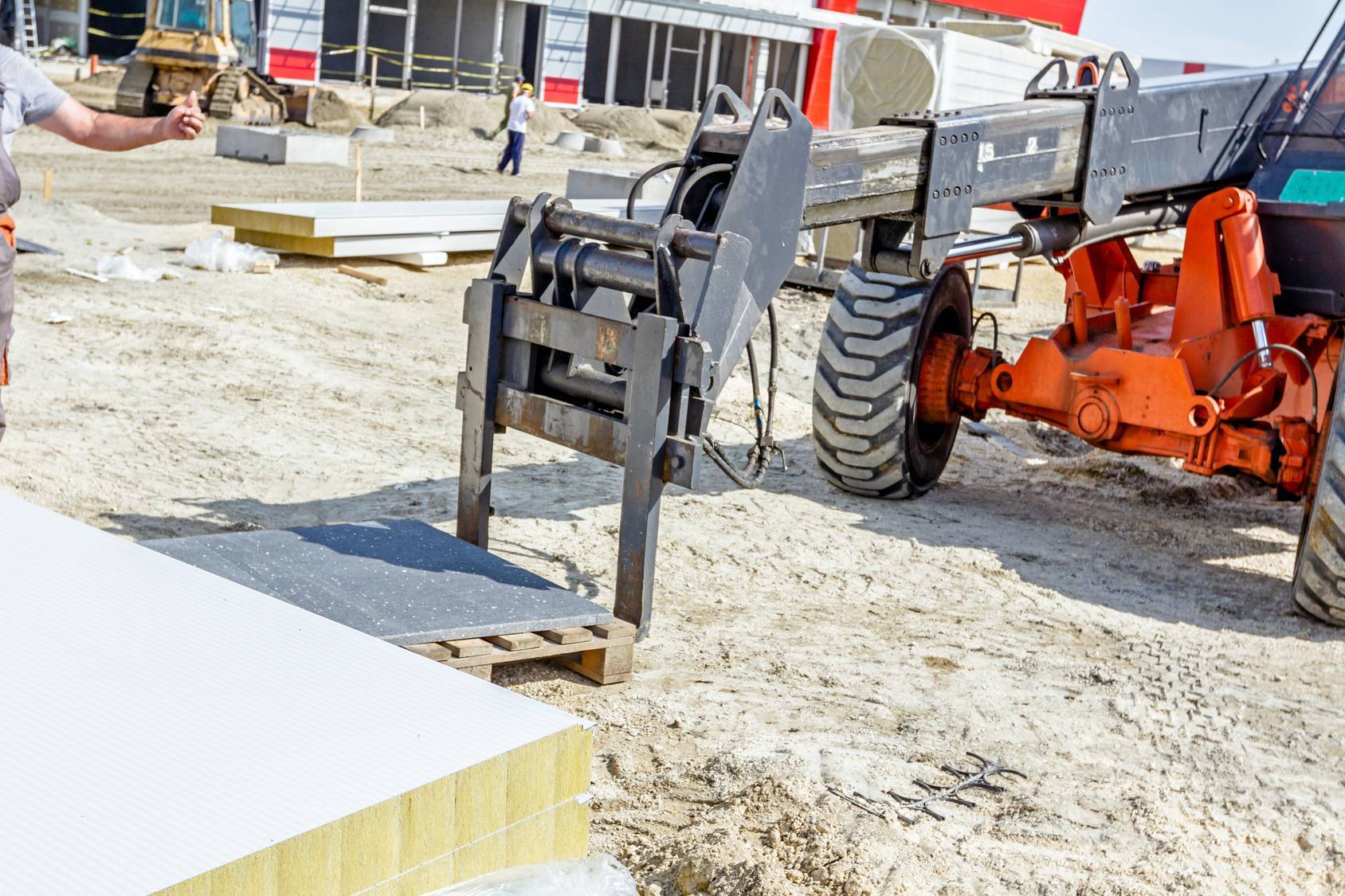
CPCS Telescopic Handler (A17)
Open courses
From £299 + VAT
Traditional classroom available UK wide
What is the CPCS Telescopic Handler course (A17)?
This CPCS telehandler training course teaches the relevant operational and safety requirements and skills telescopic handlers need to know.
Successful completion of this course will earn you your red CPCS trained operator card.
CPCS Telescopic Handler Training - Key Information
-
Foundation and Experienced courses available
-
Complete this course to apply for your Red Card or to keep your Blue Card up to date
-
CPCS is the most recognised qualification for operating plant in the UK
-
Practical, hands-on training course
-
You must hold the relevant CITB health, safety and environment test (less than 2 years old)
-
Theory assessment and practical CPCS technical test

What will I learn on a CPCS Telescopic Handler Course?
Knowledge and Skills covered on the CPCS Telehandler Course will include:
- Health & Safety when operating
- Pre-use checks of the plant equipment
- How to use the different machine controls
- How to manoeuvre
- Lifting and carrying loads
- Operating techniques
- Maintenance and checks for the telehandler
Choose a course option
All of our courses are delivered with the same level of information and support, so you can choose the style of training that best suits your environment.
Our prices include:
-
Certificates
-
Exams
-
Course materials
Benefits
-
61 courses available
-
Face-to-face learning
-
Interactive group activities
-
Immediate results and feedback
-
Meet others in your industry
Construction Plant Competence Scheme (CPCS)
The CPCS covers an extensive range of plant categories. The Construction Plant Competence Scheme uses practical and written assessments to ensure you are competent in your chosen category. These assessments are taken at the end of your training.
- Pass the relevant Health, Safety and Environment Test.
- Attend training days in your chosen category.
- At the end of your training, complete your category assessments (assessment fee’s are included in your course price).
- Receive your Trained Operator (red) or Competent Operator (blue) card.
What is the difference between the Red and Blue CPCS Card?
You can start working within your chosen category once you have earned the Red (trained operator) card. The card confirms the core skills, knowledge and understanding required. However, a newly trained operator will still require full and close supervision until they deemed sufficiently experienced to without supervision. That is where the Blue CPCS card comes in.
Red CPCS Card
Each category on your red card will have it’s own 2 year expiry date the card itself has no expiry. Your Red card is not renewable, this is to ensure progression towards your competent card (The Blue CPCS card). During the 2 years you will be expected to register and achieve a NVQ (National Vocational Qualification) or SVQ (Scottish Vocational Qualification) and upgrade to the Blue (competent operator) card.
Blue CPCS Card
To earn your Blue card you must meet the requirements of the Red card plus complete an NVQ or SVQ in your category.
Your Blue card will last for 5 years, each category on the card will have the expiry of the card itself. You will have to renew your card within the 5 years.
If you would like to read more about the application process for Red and Blue CPCS cards, read this ‘How to get your CPCS Card’ document from CPCS.

CPCS Telescopic Handler Course Content
You will cover the following learning objectives on your CPCS Telehandler course:
-
-
- The nature of the sector of industry and their role and responsibility as a plant operator.
- Name and explain the purpose of principle components, the basic construction, controls and terminology.
- Conform with the manufacturer’s requirements as per the operator’s handbook, other types of information source and relevant regulations and legislation.
- Undertake all pre-use checks.
- Explain need and function of appropriate documentation.
- Configure and ready for travel (site and highway).
- Travel over level surfaces with and without loads and, where applicable, on rough, undulating ground and inclines.
- Manoeuvre in confined spaces with and without loads.
- Follow given signals and instructions when travelling and manoeuvring with and without loads.
- Configure and ready for all lifting, loading and transferring duties.
- Attach and remove attachments, including forks, for the movement of unit loads.
- Attach and remove attachments and accessories for the movement of suspended loads.
- Explain actions required for proximity hazards, including underground and overground services.
- Follow given signals and instructions during work activities.
- Lift and remove various loads up to full extension and working height of the tele-handler.
- Transfer and place loads accurately at given locations.
- Place and remove loads from a vehicle.
- Maintain safe working situations.
- Determine the requirements for the lifting and transferring of suspended loads.
- Establish and comply with given signals and instructions.
- Lift various suspended loads from given locations.
- Travel with and place various suspended loads at given locations.
- Minimise the swinging of loads during travel.
- List different types of lifting accessories and attachments compatible with suspended loads and telescopic handlers.
- Explain the correct and incorrect methods for attaching suspended loads to the machine.
- Explain how stability is affected by travelling with both a raised boom and a suspended load.
- Explain visibility issues and restrictions with suspended loads.
- Place loads out of sight of the operator.
- Maintain safe working situations.
- Maintain safe and tidy working areas.
- Carry out shut down and securing procedures.
- Explain the loading and unloading procedures for machine transporting.
-
Customer Testimonials
Here are some testimonials left by our previous happy customers

Assessment and Certification
You will take both a theory and practical assessment for your CPCS Forklift training course.
You will take a theory assessment in the form of the CPCS verbal test. You need to achieve 80%, plus full marks on any mandatory questions to pass the standard set in the theory test.
Your practical test will assess your operating ability through practical activities based on the core skills needed to operate the forklift.
What qualification will I get on the CPCS Forklift training course?
- CPCS Trained Operator Card (red card) on passing the CPCS technical tests.
- CITB National Construction College e-certificate, available on request from CITB.

Entry Requirements
You need to have the following to enrol on the CPCS Telehandler course:
- The relevant CITB health, safety and environment test passed no more than two years before the course start date
- Good understanding of spoken and written English.
Special Considerations
The delegate can have additional time for their theory test which is a verbal or taped verbal test. If a translator is required, this will incur additional costs and will need to be arranged in advance.
If you have any questions or concerns regarding support during the course, please contact our team on 0800 0213 263.
Popular CPCS courses
View other CPCS plant categories below:

CPCS Industrial Forklift (A16)
This CPCS training course will teach you how to safely operate an industrial forklift, enabling you to become certified Forklift Operator with a CPCS red card on successful completion of your course.

CPCS Lorry Loader (A36)
This CPCS training course will teach you how to safely operate a lorry loader, enabling you to become certified Lorry Loader Operator with a CPCS red card on successful completion of your course.

CPCS Compact Crane (A66)
This CPCS training course will teach you how to safely operate a compact crane, enabling you to become certified operator with a CPCS red card on successful completion of your course.
Find a course near you
Or select a location below
Frequently Asked Questions
Here are some of the questions we frequently get asked about CPCS courses.